Agro-industrial biomass constitutes a widely available, low-disposal-cost renewable resource with high carbon content, making it a strategic raw material for energy generation, functional materials, and environmental solutions. Its renewable nature allows for conversion processes with a neutral carbon balance, an aspect that has driven its adoption as a technical alternative to fossil fuels and as a tool for sustainable waste management and greenhouse gas emission mitigation.
Through thermochemical processes, biomass can be transformed into various value vectors, including solids (biochar and activated carbons), liquids (bio-oil), and gaseous fractions rich in energy compounds. These conversion routes depend on the nature of the biomass and the applied operating conditions, such as temperature, heating rate, process atmosphere, and residence time. Among the most commonly used technologies are pyrolysis, carbonization, gasification, and torrefaction, all of which are based on thermal treatments under limited oxygen conditions.
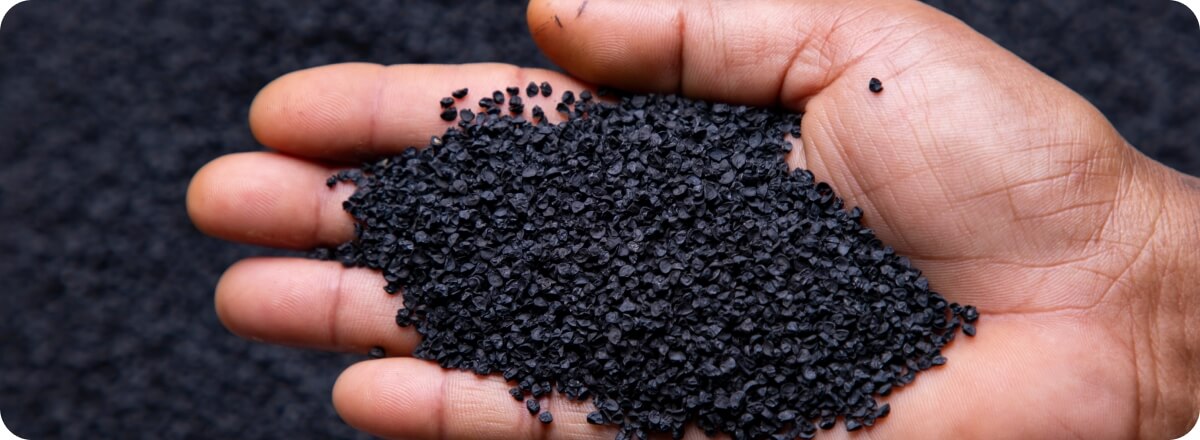
Within this set of products, biochar and activated carbon derived from biomass have acquired special relevance due to their functional versatility and high added value. Biochar is characterized by its porous structure, chemical stability, and high fixed carbon content, making it suitable for applications in soil improvement, carbon sequestration, and environmental remediation. For its part, biomass-derived activated carbon is a highly efficient adsorbent capable of removing organic and inorganic pollutants, both polar and non-polar, in aqueous and gaseous media, while also showing potential for energy storage.
The final properties of these carbonaceous materials—such as specific surface area, pore volume and distribution, and surface chemistry—are strongly influenced by the conditions of the thermochemical process. Studies report that higher pyrolysis temperatures and faster heating rates tend to reduce solid yield but favor the development of greater porosity and adsorption capacity, increasing functional performance. Furthermore, these parameters affect ash content, fixed carbon, and volatile matter, which are determining factors for their final application.
In a context of accelerated population growth, agricultural expansion, and industrial intensification, the generation of residual biomass continues to increase on a global scale. This scenario reinforces the need to rigorously evaluate the technical potential of each agro-industrial biomass, considering its composition, thermal behavior, and suitability for different valorization routes. Only through a comprehensive evaluation is it possible to select the most appropriate technology and design functional carbonaceous materials that respond to real environmental, agronomic, and industrial requirements.
Evaluating the technical potential of agro-industrial biomass requires an integrated approach that combines physicochemical characterization, thermal analysis, environmental safety criteria, and techno-economic feasibility to select technically and economically viable valorization routes. This evaluation begins with compositional and elemental characterization—including moisture, volatiles, ash, fixed carbon, lignocellulosic fractions (cellulose, hemicellulose, and lignin), CHNS-O analysis, and calorific value—as a basis for determining suitability for thermochemical processes. Subsequently, proximate, ultimate, and thermogravimetric analysis (TGA/DTG), along with the determination of HHV and LHV, allows for an understanding of thermal behavior, stability, and expected yield under different pyrolysis and activation conditions. A critical aspect corresponds to the ash and metal content, particularly alkaline elements and potentially regulated traces, which condition the safe use of the material in agronomic, environmental, and industrial applications. On this basis, biomass is specifically evaluated for its conversion into biochar or activated carbon, considering C/H/O ratios, lignocellulosic structure, porosity development potential, and response to physical or chemical activations, avoiding decisions based solely on residue availability. Finally, the selection of the optimal route is consolidated through techno-economic criteria—availability, logistics, conditioning costs, scalability, and target market—integrated into multi-criteria decision frameworks that articulate experimental data, modeling, and operational criteria. This approach allows for connecting materials science with real production decisions, ensuring that each agro-industrial biomass is valorized in a technical, safe manner aligned with the needs of the productive sector.