Agro-industrial Valorization Cases from Laboratory to Productive Application
Agro-industrial waste ceases to be a liability when evaluated as technological platforms capable of generating energy, materials, and high-value products. Scientific evidence shows that lignocellulosic by-products, food processing residues, and industrial effluents can be integrated into biorefinery schemes, provided there is rigorous characterization and a valorization route consistent with their composition and production context.
The transformation begins in the laboratory, where biomass is defined before being processed. Recent studies demonstrate that agricultural and agro-food residues contain usable fractions of cellulose, hemicellulose, and lignin, as well as bioactive compounds and energy precursors. This stage is decisive, because it determines whether the biomass is suitable for fermentation, pyrolysis, gasification, or hybrid processes. Characterization is not a technical formality; it is the filter that prevents unfeasible routes and subsequent cost overruns.
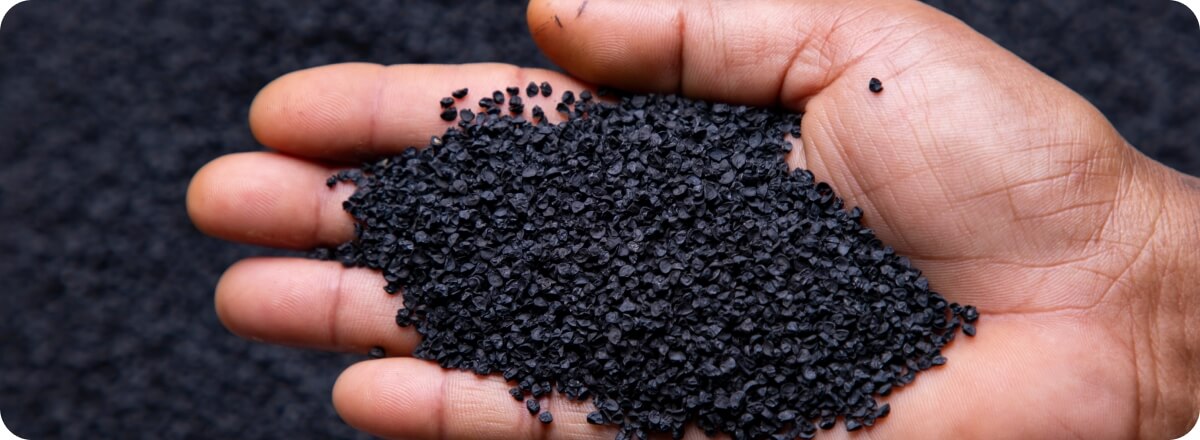
From this foundation, valorization advances toward specific processes. In thermochemical scenarios, controlled pyrolysis enables the production of biochar, bio-oil, and syngas, each with differentiated applications. Biochar stands out for its use in soils and environmental systems, where it improves physicochemical properties and acts as a carbon sink. Bio-oil and syngas, on the other hand, are oriented toward energy and chemical matrices, although they require conditioning to be competitive at industrial scale. The key is not to force applications: not all biomass should be converted into energy, nor is every carbonaceous residue automatically good biochar.
The leap from laboratory to productive application occurs when technology is integrated into the territory. Documented cases show that residues from the brewing, dairy, palm, or fruit industries can be converted into real inputs for agriculture, energy, or manufacturing, provided logistical, regulatory, and market variables are considered. Successful valorization is not the most sophisticated; it is the one that adapts to the local context, reduces costs, and generates measurable value.
These cases confirm a central idea: biomass is not valuable because of its origin; it is valuable because of its function. Converting waste into a strategic input involves reading its chemistry, choosing the appropriate route, and designing a solution that connects science, process, and application. That is where valorization stops being an attractive concept and becomes a real tool for productive transition and circular economy.