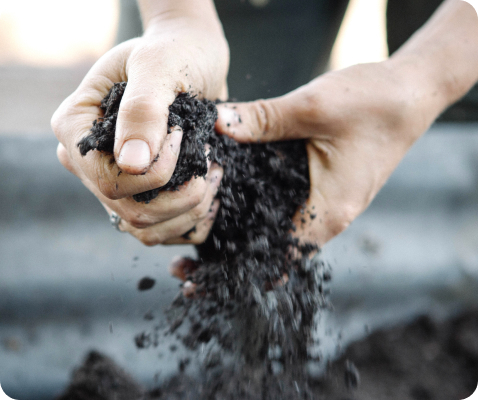
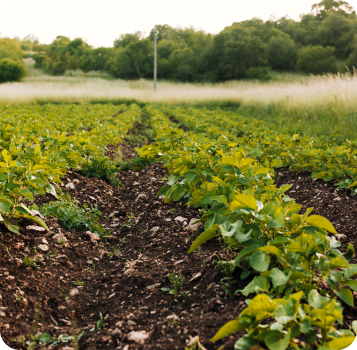
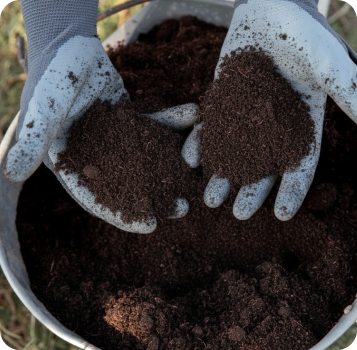
From biomass to fertile soil.
This material functions as a soil amendment, carbon sink, and key element for regenerative agriculture.
NanoMOF produces biochar from agro-industrial residues such as cocoa husk, coconut, and sugarcane bagasse.
Each ton of biochar generated contributes to capturing CO₂ and restoring life to ecosystems.
Lignocellulosic biomass (cocoa, coconut, coffee, sugarcane, rice).
Controlled or microwave-assisted pyrolysis.
Micro and mesoporous. .
250–600 m²/g. .
8–10. .
Fixed carbon above 75%. .
NanoMOF biochar is developed through applied research in advanced pyrolysis and structural characterization.
Our team works to optimize its water retention capacity and nutrient adsorption.
Retains water and nutrients in its porous structure.
Improves soil aeration and microbiology.
Increases fertility and reduces erosion.
Fixes atmospheric carbon long-term.
Reduces the need for chemical fertilizers.
Captures CO₂ and contributes to emission reduction.
Regenerates degraded soils and improves agricultural productivity.
Guarantees complete traceability of biomass origin.
Comprehensive guide to industrial and environmental applications of Biochar.
FTIR, TGA, CHONS, SEM, and pH
Certified laboratory analyses
No risks to health or the environment
NanoMOF Biochar
Generic biochar
250–350
Compost
70–80